Managing the Impact of Collaboration Technologies on Your Network

  Presented by Cerium Networks

Today’s collaboration technologies come with many exciting features and benefits–all of which impact the network in various ways. This session will help the audience understand those impacts and how to manage them. This session covers everything from inter-branch communications, survivability, collaboration beyond your walls, and ensuring your collaboration environment is secure.

Topics include:

  • Inter-Branch Communications
    • SD-WAN
  • QOS, Path Diversity, Low Latency
    • Network requirements based on whether on-prem, cloud, or hybrid
    • Cloud Transport Leg/Poke –3rd Party Connections
  • Survivability
    • WAN/LAN resiliency
    • Local Call Processing / Failover Call Processing
  • Collaboration Beyond your Walls
    • Remote Workers
    • BYOD
    • Video Conferencing
    • Teams-based collaboration tools that combine meetings, calls, and IM into one platform
  • Ensuring your Environment is Secure
  • SIP
  • Toll Fraud
  • TLS Encryption
  • Encrypting the media
  • Certificates
  • Trunk Protection TDM/SIP
  • BYOD Policy Enforcement/MDM

Emerging Trends in Collaboration Technologies

  Presented by Cerium Networks

The need for collaboration is ever-present and more important now than ever. This session provides an update on the current landscape of collaborative communications technologies and trends—both available now and emerging in today’s marketplace. Upon completion, participants should understand how the collaboration landscape is changing from technology, administration, and business impact perspectives.

Topics include:

  • Adoption strategy is key!
  • User personas and moving beyond feature maps
  • Licensing models (trends and realities)
  • The one-stack model – Moving collaboration beyond telephony (voice, meetings, messaging, video, content/file sharing, third party API & integrations, etc.)
  • Manufacturer adoption and challenges with blended solutions

Information Technology at Washington State University

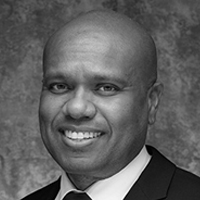
  Presented by Sasi Pillay • VP and CIO at Washington State University

Information Technology management is all about serving the customer. IT is the enabling force for everything we do, whether it is about recruiting promising prospects, providing a sound education, improving retention and graduation rates, providing career counseling and managing the students after graduation as successful alumni. It addresses teaching, learning, research and outreach.

The foundation of IT management is built on three tenets: Mission Enablement, Enterprise Risk Reduction and Cost-effective Operations. This presentation focuses on how a portfolio of services can be created with these tenets. Making progress on IT services also requires an IT governance process. The talk will include an example of a working governance process at WSU and how it is used to create a portfolio of services for the university.

Dr. Sasi Pillay serves as the Vice President and Chief Information Officer at Washington State University. In this role he oversees the computing infrastructure of foundational technologies and research computing, working in collaboration with his constituents.

Earlier he served as the Chief Technology Officer for Information Technology (IT) at National Aeronautical and Space Administration (NASA). Dr. Pillay is the recipient of several awards including NASA’s Exceptional Service Medal and the Outstanding Leadership Medal. Additionally, the Presidential Rank Award recognizing him as a Meritorious Executive in the U.S. federal government.

Dr. Pillay received his B.S. in Mechanical Engineering from Pennsylvania State University, M.S. and Ph.D. degrees in Computer Engineering from Case Western Reserve University. He also has a master’s degree in Management of Technology from the Sloan School of Management at the Massachusetts Institute of Technology.

Simplifying Security: Training for The Non-IT Professionals

  Presented by Community Security Coalition

With thousands of cyber security solutions out today in the market, simplifying your company’s security strategy has become more complicated than ever. Taking the holistic approach of enabling all members of your organization has never been more important or difficult. Join the CSC as they discuss the need for security education in todays every changing cyber landscape and how you can enable all employees of varying levels of technical expertise with the latest best-practices for their cyber defense.

AI Comes of Age

  Presented by BlackBerry Cylance & target=”_blank”>Structured

Today, artificial intelligence seems to be everywhere and it’s still gaining momentum – especially in cybersecurity applications. International Data Corporation predicts organizations will invest $35.8 billion in AI systems in 2019, up 44% from the previous year. But it’s important to understand that not all machine learning algorithms or artificial intelligence solutions are created equally. What are the most prevalent challenges in and concerns of leveraging AI in securing corporate information? What are the questions to ask when evaluating an AI-based cybersecurity solution?

Cyber AI: Fighting Back with Autonomous Response

  Presented by Darktrace

The digital enterprise is constantly expanding, with new IoT, cloud, and operational technologies all challenging traditional notions of cyber security. Safeguarding these evolving environments against machine-speed attacks has never been more difficult.

Yet the digital battleground now features its most formidable defender in Cyber AI—a self-learning technology that distinguishes friend from foe in order to thwart threats autonomously. With the Cyber AI Platform protecting your entire infrastructure in real time, it doesn’t matter whether the attack originates on a connected device, an industrial system, or in the cloud. Wherever it strikes, the AI fights back in seconds.

In this session, you’ll discover:

  • Why only Autonomous Response can counter today’s machine-speed attacks
  • Where advanced threat-actors exploit vulnerabilities in the cloud and IoT
  • What achieving 100% visibility can reveal about your organization’s risk profile
  • How the Cyber AI Analyst reduces the time spent triaging threats by 92%

Master the Edge: How to Achieve Context-Aware, Secure Access in a Mobile Era

  Presented by Aruba & Structured

Are you juggling disparate security platforms and struggling to make sense of the data? Do you need to share information and insights across teams but lack a cohesive way to do that? If so, attend this session. Learn how to deploy an open, multi-vendor Enterprise security framework that gives security and IT teams an integrated way to gain visibility, control and advanced threat defense. See how security prioritization and machine learning helps organizations leverage existing third-party solutions to better protect investments and implement proactive risk controls.

Mitigating Cybercrime Through Automated Response and Integration

  Presented by Fortinet

Come join our talk on mitigating cybercrime and learn about best practices to help your company maintain a strong security posture through the digital transformation and beyond. The bad guys are using automated tactics to try to find a foothold in your network. Isn’t it time to leverage an integrated security approach to automate your response?

Towards an Alabama State-Wide Network

  Presented by Dr. Damian Clarke • Chief Information Officer, Alabama A&M University

It is clear that society is moving into the digital age, yet much of the infrastructure required to build the economic base capable of delivering goods and services to communities in Alabama does not exist. The quality and effectiveness of the services delivered by utilities, educational, governmental, health, safety, and law enforcement organizations are increasingly dependent on wide-area network connections and the internet services they enable. Recognizing the limitations of currently provided state-wide network services, the consortium of the CIO’s of 14 public universities have joined in discussions and planning activities to study holistic alternatives for the establishment and operation of an advanced network backbone capable of reaching most, or all, of the state offices, campuses, and other facilities across Alabama.

Dr. Damian Clarke is the Chief Information Officer (CIO) and Computer Science Faculty at Alabama Agriculture and Mechanical University (AAMU). He received his Ph.D. in Computer Science from the University of Miami and a Masters in Computer Science from George Washington University. His undergraduate is in Mathematics and Computer Science from South Carolina State University. As CIO, he oversees the management of the university’s network and communications infrastructure, Enterprise Resource Planning system (BANNER), Academic Information Technology, and other Information Technology (IT) services that support all levels of research, learning, and teaching. Dr. Clarke serves as the Chair of the Alabama Higher Education CIO (HE-CIO) Council. The HE-CIO council’s purpose is to create synergy among Alabama’s universities and research centers, in partnership with state offices by collectively promoting improved service delivery and economic advantages. Dr. Clarke is a founding member of the Minority Serving – Cyberinfrastructure Consortium (MS-CC), a transformational partnership to advance cyberinfrastructure (CI) capabilities on HBCU, HSI, TCU, and MSI campuses, with data, research computing, teaching, collaboration, and capacity-building connections among institutions. MS-CC goal is to learn and grow as a consortium, dedicated to lifting all participating institutions in advancing research and education across diverse fields, disciplines, and communities as full contributors in the global research and education community. Before becoming CIO at AAMU, Damian was the CIO and Computer Science faculty at South Carolina State University (SCSU). Dr. Clarke was the original PI for a two year $500K National Science Foundation grant, “CC* Networking Infrastructure: Bulldog Connectivity and Research.” SCSU was the first of two HBCUs to receive the CC* Networking Infrastructure award.


Risk, Reliance and the Resilience Imperative

  Presented by Jeff Gaynor • President, American Resilience, LLC

America’s critical infrastructures empower the spectrum of National Life. Over the past four decades they have become near-inextricably reliant on a globally accessible and increasingly exploited Internet America has been unable to “secure.” Given that no one has been able to define how much protection or cybersecurity is required to either protect critical infrastructures and/or secure cyberspace; a proactive critical infrastructure — and by extension — national preparedness and security condition, validated by an objectively measurable and universally accepted success metric is now an imperative. Accordingly, thethis presentation and discussion will focus on the means to achieve and sustain Critical Infrastructure Resilience and in the process of doing so: Corrupt “The Predators View,” lower American infrastructure target values, correct the Nation’s cyber-reliant preparedness trajectory and ensure the safety, security, quality of life and future for this and generations of Americans’ to follow